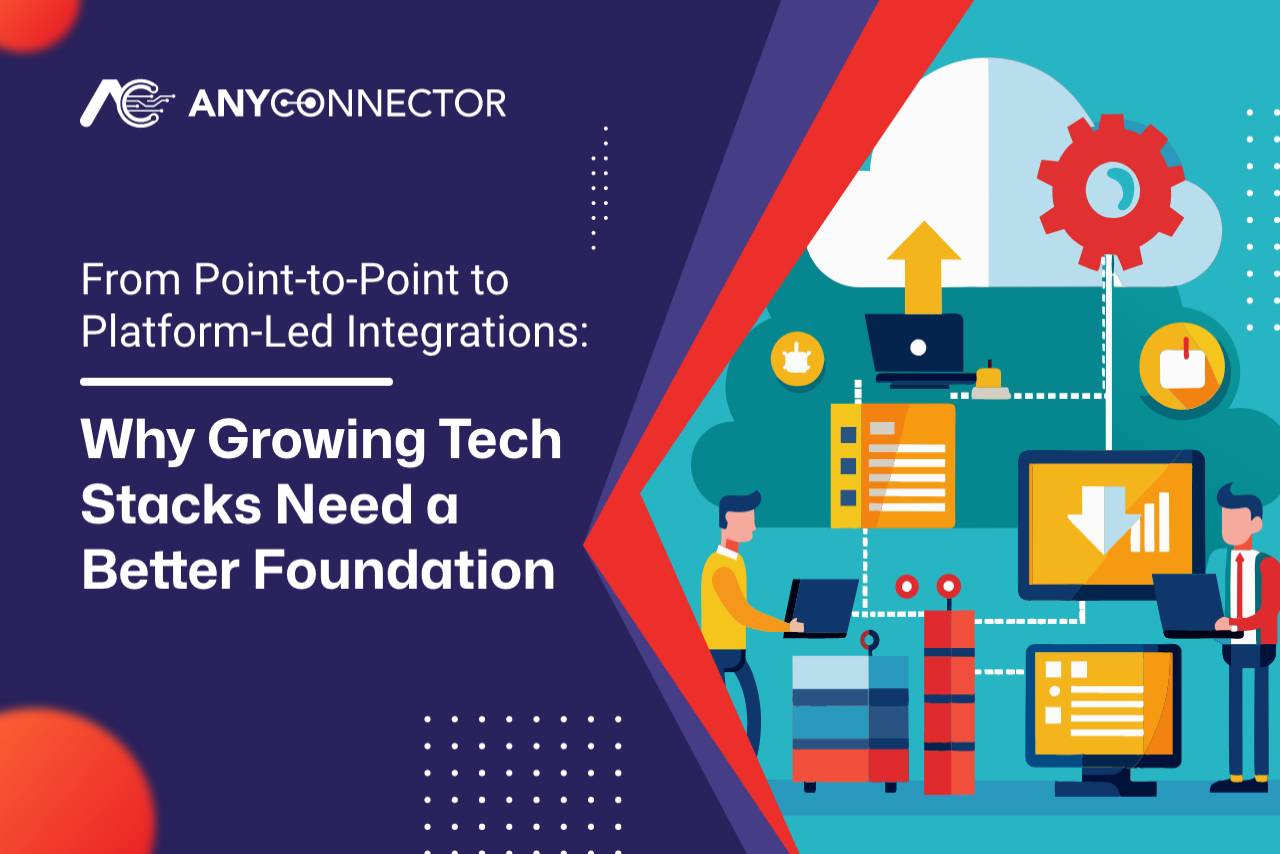
Adding a new system should create momentum not a chain reaction of fragile connections, manual workarounds, and reporting doubt.
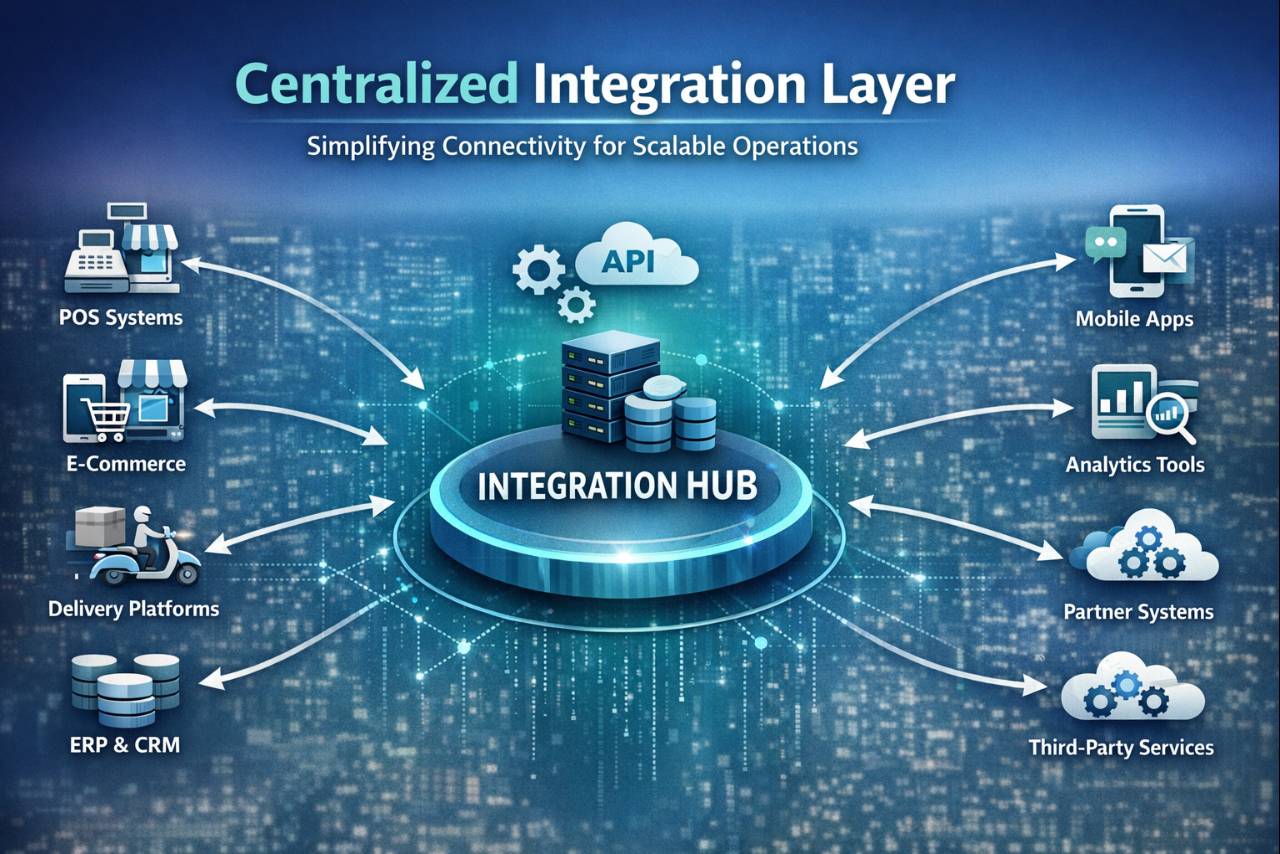
A centralized integration layer helps organizations replace fragile system-to-system dependencies with a more scalable operating model.
Direct system links look efficient until the third detour and the fifth merge. As more apps go live, you're effectively building side streets between every address in town. It works when traffic is light. Then a new field or vendor update lands, and suddenly your routes collide- data slows, support tickets pile up, and teams add manual checkpoints just to trust the numbers.
The problem isn't that you're adopting too many tools. It's that you're managing traffic without a central interchange. A platform-led integration layer acts like a well-designed roundabout- consistent rules, fewer collisions, and the freedom to add new lanes without redrawing the entire map.
A centralized integration layer helps organizations replace fragile system-to-system dependencies with a more scalable operating model.
Direct system links look efficient until the third detour and the fifth merge. As more apps go live, you're effectively building side streets between every address in town. It works when traffic is light. Then a new field or vendor update lands, and suddenly your routes collide- data slows, support tickets pile up, and teams add manual checkpoints just to trust the numbers.
The problem isn't that you're adopting too many tools. It's that you're managing traffic without a central interchange. A platform-led integration layer acts like a well-designed roundabout- consistent rules, fewer collisions, and the freedom to add new lanes without redrawing the entire map.
When "just one more integration" becomes a pattern
Point-to-point integrations feel efficient at first because they solve an immediate need. Two systems need to share data, so they are connected directly. Then another system gets added. And another. Before long, one application is talking to several others, each with its own logic, mappings, schedules, and failure points. The complexity doesn't arrive all at once-it accumulates quietly until a routine change suddenly carries outsized risk.
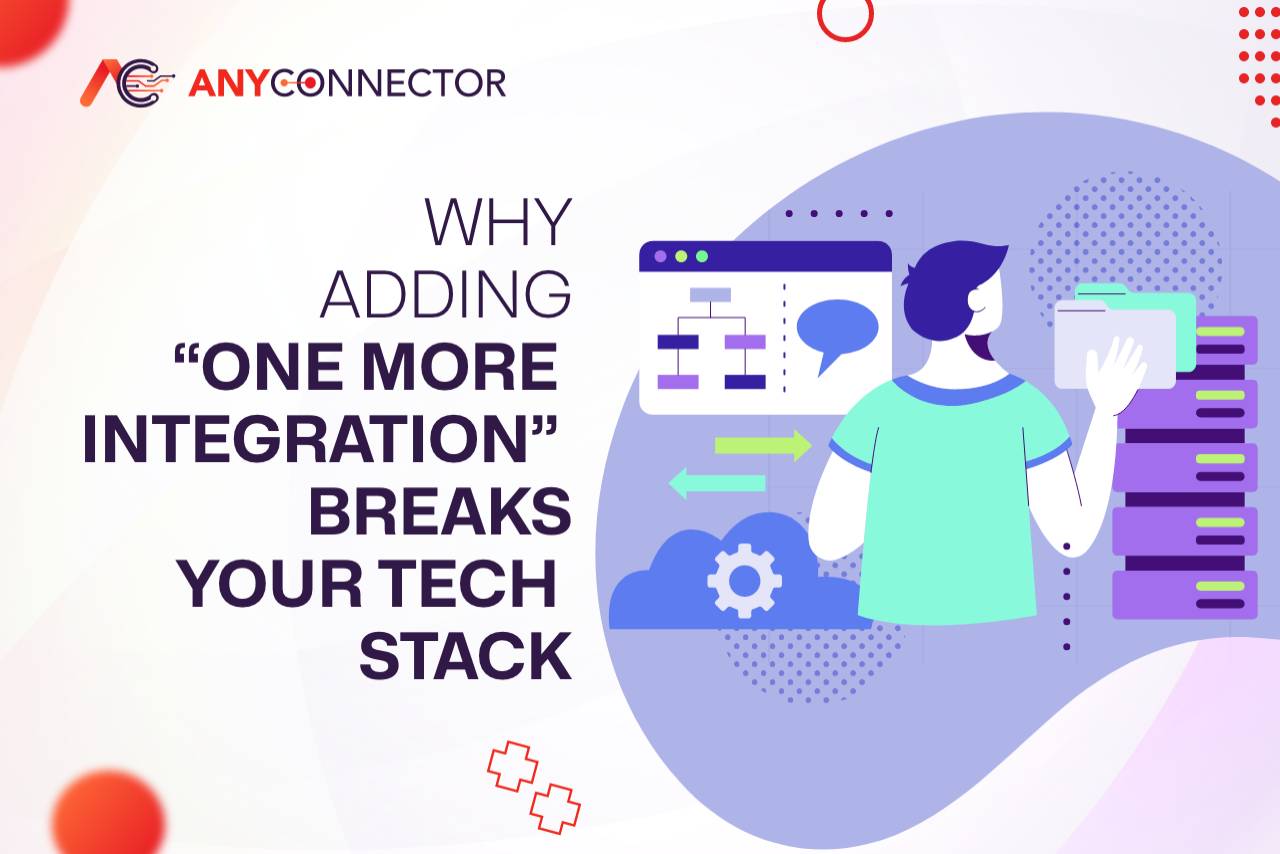
That pattern closely mirrors the problem described in Why One More Integration Quietly Breaks Your Tech Stack, where integration sprawl is framed as the moment a stack stops feeling like a set of tools and starts feeling like tangles. It's a useful lens because the problem is rarely visible at launch; it shows up later - when a small data field change, a vendor update, or a reporting adjustment unexpectedly breaks several workflows at once.
That pattern closely mirrors the problem described in Why One More Integration Quietly Breaks Your Tech Stack, where integration sprawl is framed as the moment a stack stops feeling like a set of tools and starts feeling like tangles. It's a useful lens because the problem is rarely visible at launch; it shows up later - when a small data field change, a vendor update, or a reporting adjustment unexpectedly breaks several workflows at once.
The operational friction teams feel every week
The biggest danger of a fragmented integration model is that it rarely fails in dramatic ways. Instead, it creates small, recurring issues that teams normalize over time. A menu update makes it into the POS but not the ordering channel. A time punch reaches payroll late. Inventory counts don't line up with sales. A finance team member exports one report to validate another. None of these problems seem massive on their own, but together they create a steady drag on speed, confidence, and decision-making.
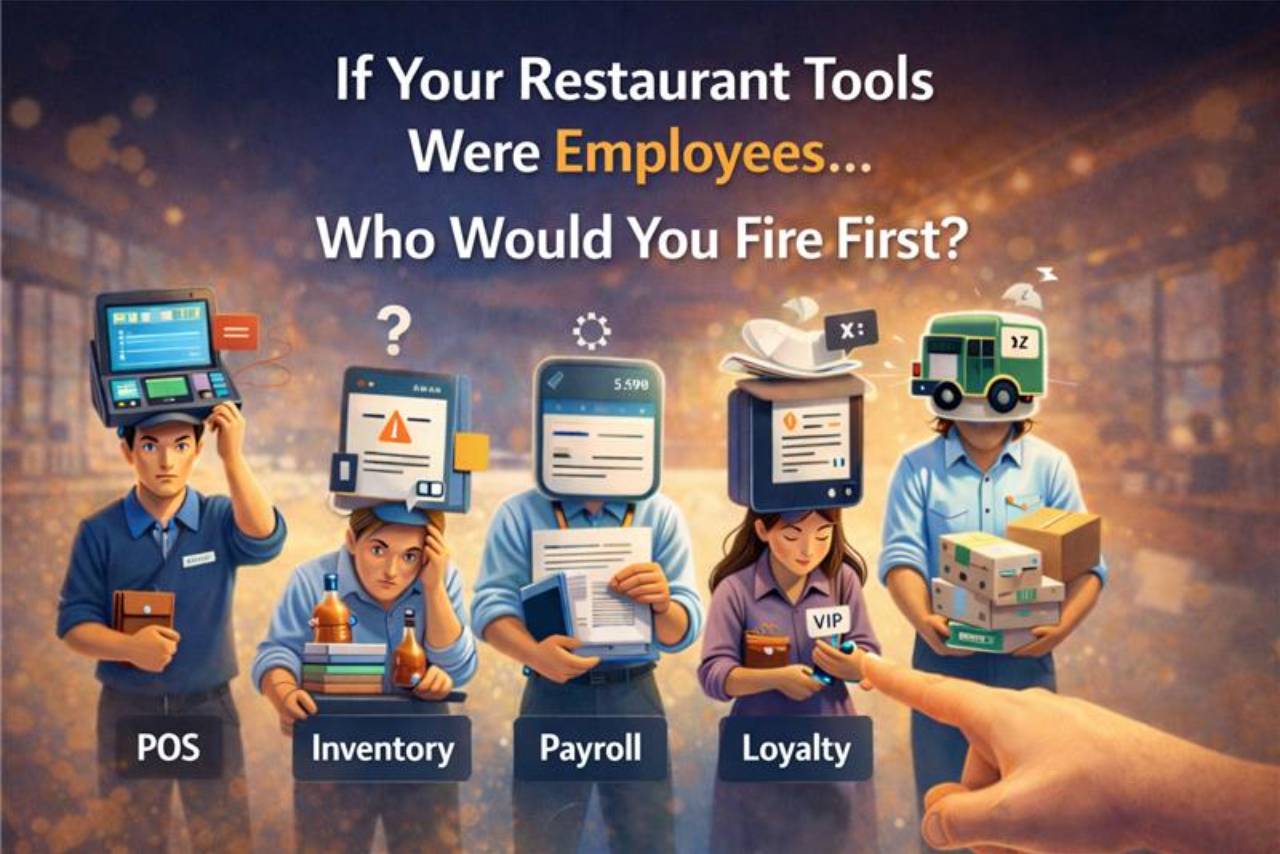
That downstream effect is captured especially well in The Integration Snowball Effect, which shows how one disconnected workflow can multiply into dozens of manual fixes across ordering, inventory, labor, accounting, and reporting. It's a strong reminder that integration issues are rarely isolated. When systems fall out of sync, the cleanup work cascades across departments.
"The problem isn't technology adoption. The problem is how technology is connected."
That downstream effect is captured especially well in The Integration Snowball Effect, which shows how one disconnected workflow can multiply into dozens of manual fixes across ordering, inventory, labor, accounting, and reporting. It's a strong reminder that integration issues are rarely isolated. When systems fall out of sync, the cleanup work cascades across departments.
"The problem isn't technology adoption. The problem is how technology is connected."
Why platform-led integration changes the conversation
Platform-led integration offers a different model. Instead of building and maintaining a web of direct system-to-system connections, organizations introduce a centralized integration layer. Systems connect to the platform, and the platform manages how data moves, how values are transformed, and how workflows are monitored. The result is not simply fewer connections; it is a more predictable way to operate.
That predictability matters. It means new systems can be added without rewriting everything around them. It means transformations are standardized rather than recreated over and over. It means monitoring lives in one place, making it easier to spot issues before they turn into manual fire drills. Most importantly, it gives teams confidence that the stack can evolve without becoming chaotic.
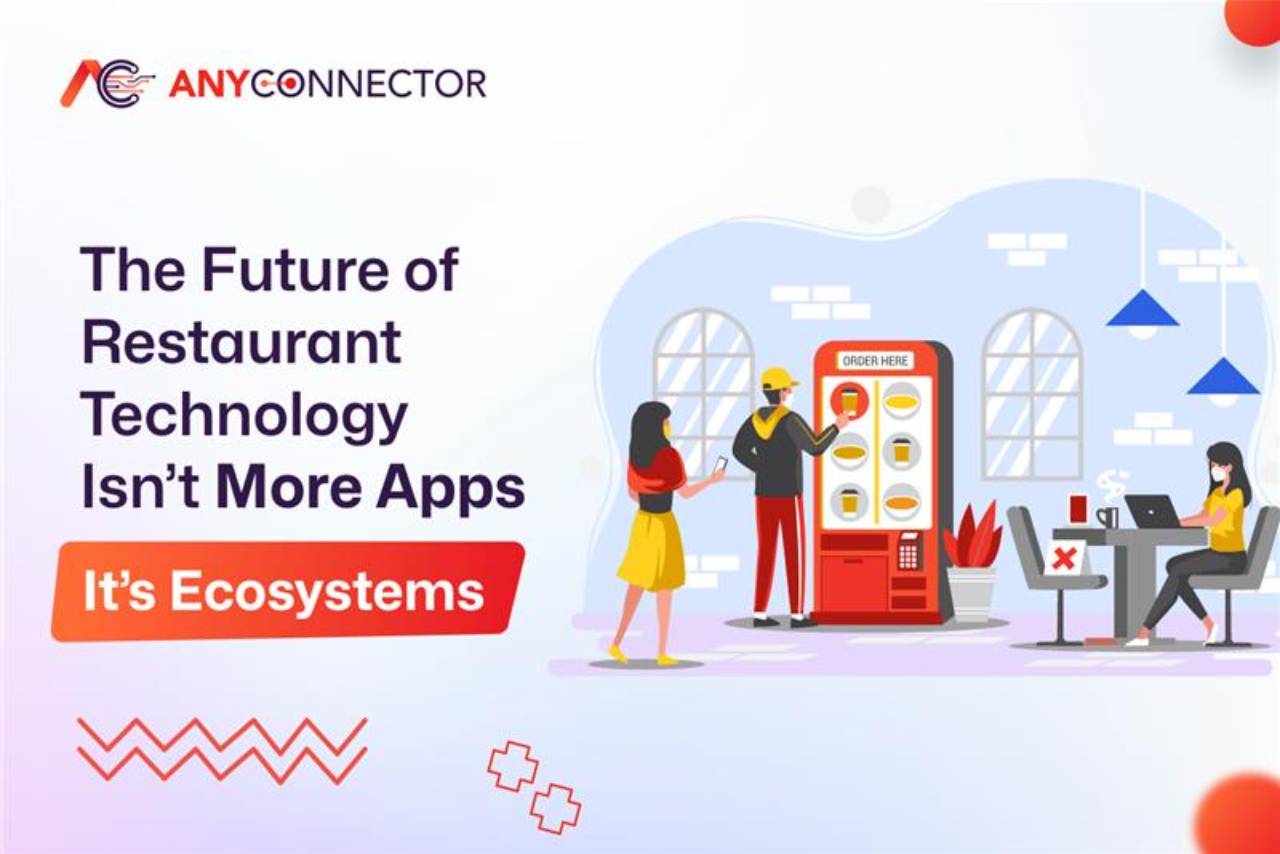
This broader shift toward connected ecosystems is reflected in The Future of Restaurant Technology Isn't More Apps It's Ecosystems, which makes the case that modern businesses do not need more standalone tools-they need a digital environment where systems exchange data automatically and in real time. That idea applies far beyond restaurants- when the integration layer becomes the backbone, technology starts working like an ecosystem rather than a collection of separate applications.
That predictability matters. It means new systems can be added without rewriting everything around them. It means transformations are standardized rather than recreated over and over. It means monitoring lives in one place, making it easier to spot issues before they turn into manual fire drills. Most importantly, it gives teams confidence that the stack can evolve without becoming chaotic.
This broader shift toward connected ecosystems is reflected in The Future of Restaurant Technology Isn't More Apps It's Ecosystems, which makes the case that modern businesses do not need more standalone tools-they need a digital environment where systems exchange data automatically and in real time. That idea applies far beyond restaurants- when the integration layer becomes the backbone, technology starts working like an ecosystem rather than a collection of separate applications.
What this looks like in the real world
For business leaders, platform-led integration is valuable because the benefits show up in daily execution, not just in architecture diagrams. Menu changes propagate across channels without someone chasing updates. Sales data flows into inventory, payroll, and accounting without repeated exports. Reports align because the same definitions and mappings are applied consistently. Teams spend less time validating information and more time acting on it.
This is the moment where integration stops being a technical conversation and becomes an operational advantage. When data moves through a controlled platform instead of a fragile chain of custom point-to-point links, reliability improves, troubleshooting gets faster, and growth feels less risky. The business is no longer reacting to every change in the stack. It has a foundation designed to absorb change.
This is the moment where integration stops being a technical conversation and becomes an operational advantage. When data moves through a controlled platform instead of a fragile chain of custom point-to-point links, reliability improves, troubleshooting gets faster, and growth feels less risky. The business is no longer reacting to every change in the stack. It has a foundation designed to absorb change.
Streamline Your Inventory. Order Smartly.
Start Simplifying Your Orders with Any Connector
Where Any Connector fits
Any Connector supports this platform-led approach by centralizing integrations in one place. Instead of maintaining dozens of brittle connections across systems, organizations can manage data mappings, transformations, and workflows through a single integration layer. That creates a more stable operating model for teams that need to add new tools, expand locations, or launch new digital channels without rebuilding the stack every time something changes.
In practical terms, the advantage is clarity. Operators get synchronized systems. Finance gets cleaner reporting. IT gets more predictable change management. Leadership gets a technology foundation that can grow with the business instead of slowing it down. That is the real value of platform-led integration- not just connecting software, but removing friction from the way the business runs.
In practical terms, the advantage is clarity. Operators get synchronized systems. Finance gets cleaner reporting. IT gets more predictable change management. Leadership gets a technology foundation that can grow with the business instead of slowing it down. That is the real value of platform-led integration- not just connecting software, but removing friction from the way the business runs.
The takeaway
Technology stacks will continue to evolve. Vendors will update APIs. New tools will enter the business. New channels will open. The question is not whether complexity will appear-it will. The real question is whether your architecture is built to contain that complexity or multiply it.
Point-to-point integrations can work when the environment is small. But as organizations scale, they need something more resilient than a growing chain of direct dependencies. A platform-led model gives teams a way to reduce maintenance overhead, improve data consistency, and expand with confidence. In that sense, the advantage is bigger than integration itself. It is operational stability at scale.
Point-to-point integrations can work when the environment is small. But as organizations scale, they need something more resilient than a growing chain of direct dependencies. A platform-led model gives teams a way to reduce maintenance overhead, improve data consistency, and expand with confidence. In that sense, the advantage is bigger than integration itself. It is operational stability at scale.
Recommended
integrated-platforms

integrated-platforms
Automation in Hospitality- Transforming Guest Experiences and

integrated-platforms

integrated-platforms

integrated-platforms

integrated-platforms

integrated-platforms
integrated-platforms

integrated-platforms
integrated-platforms
integrated-platforms
integrated-platforms

integrated-platforms
integrated-platforms

integrated-platforms
integrated-platforms
integrated-platforms
integrated-platforms
integrated-platforms
integrated-platforms
integrated-platforms
integrated-platforms
integrated-platforms
How Integration Platforms Are Revolutionizing Business Technology
integrated-platforms
integrated-platforms
integrated-platforms
integrated-platforms
integrated-platforms
Overcoming API Documentation Challenges- How Middleware Bridges
integrated-platforms
integrated-platforms
integrated-platforms
Composable Architecture- Building Modular Restaurant Tech Stacks
integrated-platforms
integrated-platforms
Low-Code/No-Code API Integration for Non-Tech Restaurant Teams

integrated-platforms
integrated-platforms
integrated-platforms
integrated-platforms
integrated-platforms
integrated-platforms
integrated-platforms
integrated-platforms
integrated-platforms
integrated-platforms
integrated-platforms

integrated-platforms

integrated-platforms
integrated-platforms
integrated-platforms
integrated-platforms
integrated-platforms
integrated-platforms
integrated-platforms
integrated-platforms

integrated-platforms

integrated-platforms
integrated-platforms
integrated-platforms
integrated-platforms
integrated-platforms
integrated-platforms
integrated-platforms
integrated-platforms
integrated-platforms
integrated-platforms
integrated-platforms
integrated-platforms
integrated-platforms
From Point-to-Point to Platform-Led Integrations- Why Growing
integrated-platforms
integrated-platforms