At first, it looks like a small issue-
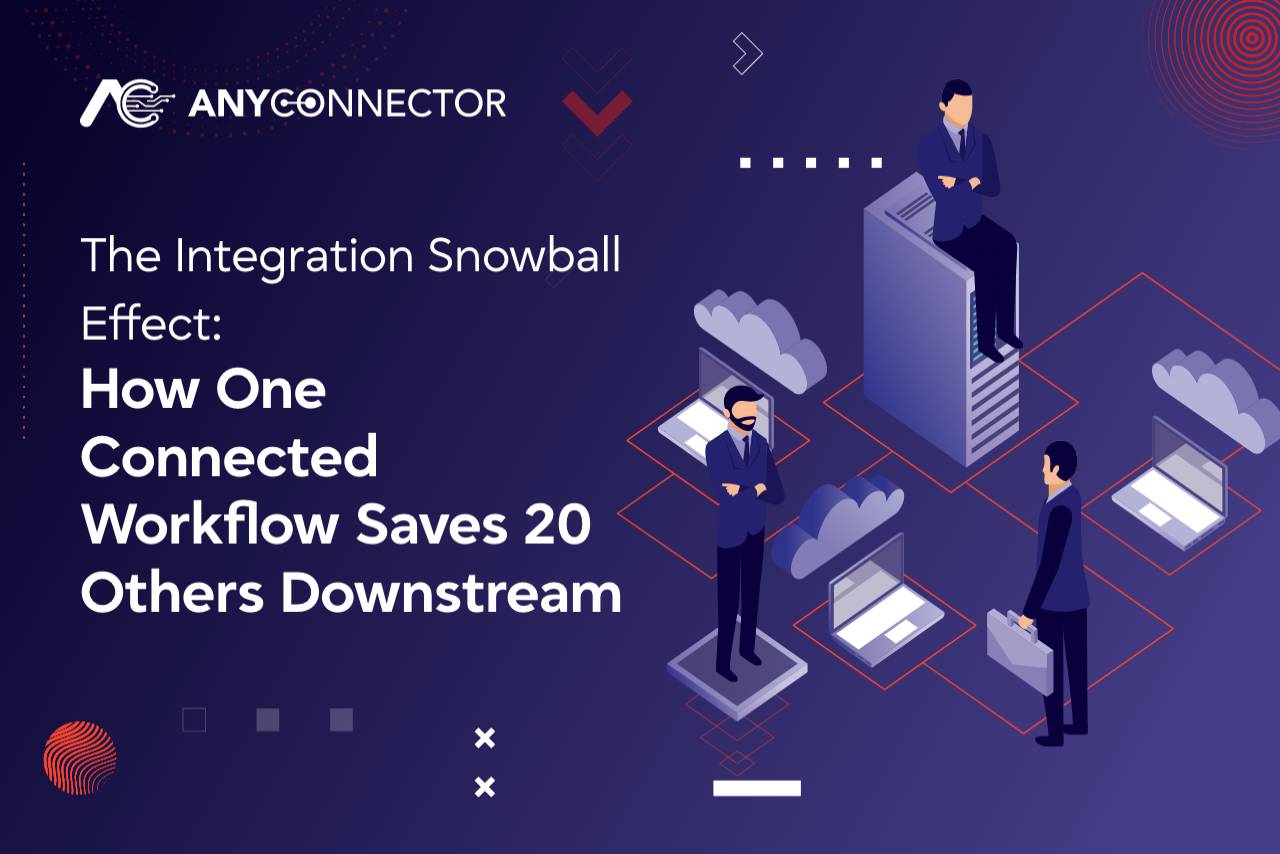
Most restaurants do not realize that a single disconnected workflow rarely stays small. It snowballs - because modern operations run on chains of systems, not a single platform.
When one system syncs correctly, it does not just fix one problem. It quietly prevents dozens of downstream mistakes across ordering, inventory, labor, accounting, and reporting.
That is the Integration Snowball Effect.
- A menu price updates in the POS, but not on a delivery app
- A loyalty reward shows up late
- Payroll totals do not match the hours managers expected
Most restaurants do not realize that a single disconnected workflow rarely stays small. It snowballs - because modern operations run on chains of systems, not a single platform.
When one system syncs correctly, it does not just fix one problem. It quietly prevents dozens of downstream mistakes across ordering, inventory, labor, accounting, and reporting.
That is the Integration Snowball Effect.
The hidden truth about restaurant operations
Restaurants run on connected workflows across multiple tools-
- POS and menu management
- Online ordering and third-party delivery
- Kitchen display systems (KDS)
- Inventory, purchasing, and vendor ordering
- Workforce management, timekeeping, and payroll
- Accounting, loyalty, and CRM
How the snowball starts without integration
Here is a simple example- a single price change on one menu item.
What breaks downstream
What breaks downstream
- Delivery menus show old pricing, leading to guest complaints and refunds
- Promotions and combos price incorrectly across channels
- Kitchen tickets do not match what guests paid, creating remake risk
- Inventory usage and food cost tracking become inaccurate
- Loyalty points calculate off the wrong revenue amount
- Accounting receives inconsistent sales totals by channel
- Managers lose confidence in reports and revert to spreadsheets
The snowball effect with integration
Now flip the same scenario with real-time, end-to-end integration-
One change -> many wins
One change -> many wins
- Update price once in the POS or menu system
- Menus sync across web, kiosks, and delivery platforms
- Orders flow cleanly to the kitchen with the correct totals and modifiers
- Inventory depletes automatically with consistent item mapping
- Loyalty and CRM receive accurate purchase data
- Accounting posts clean revenue records by store and channel
- Dashboards update quickly so leaders can act the same day
Before vs. after- the integration snowball impact
Results vary by brand and system mix, but these are common patterns when workflows are connected end-to-end.
| Area | Without integration | With integration |
| Menu updates | Manual updates and mismatches | Real-time sync across channels |
| Order accuracy | Higher error and remake risk | More consistent ticket flow |
| Refunds and disputes | More frequent exceptions | Fewer exceptions |
| Inventory variance | 15-25% variance is common in disconnected environments | <5% with reliable real-time depletion |
| Manager admin time | 8-10 hrs/week chasing data | 1-2 hrs/week with automated sync |
| Reporting | Delayed or inconsistent KPIs | Near-real-time visibility |
| Guest experience | Inconsistent across channels | More seamless and predictable |
Streamline Your Inventory. Order Smartly.
Start Simplifying Your Orders with Any Connector
Where the biggest snowballs form
Some integrations create outsized downstream savings because they touch almost everything-
- POS integration- the hub that drives pricing, ordering, discounts, taxes, and reporting
- Inventory integration- improve forecasting, purchasing, and margin control
- Payroll and HR integration- reduce reconciliation work and strengthen compliance
- Third-party delivery integration- protect digital revenue and reduce order failures
- Accounting integration- improve financial accuracy and speed close cycles
Why one integration beats 20 manual fixes
Manual work does not scale. Connected workflows do.
When data flows reliably between systems, restaurants typically see-
When data flows reliably between systems, restaurants typically see-
- Fewer errors and fewer exceptions
- Faster decision-making with consistent KPIs
- Less manager busywork and fewer spreadsheet workarounds
- More consistent guest experiences across channels
- Easier multi-location expansion because processes are repeatable
Why Any Connector powers the snowball effect
Any Connector acts as the integration engine behind the scenes, keeping workflows in sync across your restaurant tech stack.
- Real-time, end-to-end data sync across POS, inventory, payroll, loyalty, accounting, and delivery
- Multi-system connectivity for franchises and enterprise brands
- Secure, scalable, enterprise-grade reliability
- Works with modern platforms and legacy tools
Final thought- small fixes, massive impact
The biggest operational improvements do not come from working harder; they come from connecting smarter.
When one workflow syncs correctly-
And with Any Connector, you do not just fix one problem, you quietly solve twenty.
Because in modern restaurants, integration is not a feature. It is the foundation.
When one workflow syncs correctly-
- Errors drop
- Teams breathe easier
- Guests feel the difference
- Growth gets simpler
And with Any Connector, you do not just fix one problem, you quietly solve twenty.
Because in modern restaurants, integration is not a feature. It is the foundation.
Recommended
integrated-platforms

integrated-platforms
Automation in Hospitality- Transforming Guest Experiences and

integrated-platforms

integrated-platforms

integrated-platforms

integrated-platforms

integrated-platforms
integrated-platforms

integrated-platforms

integrated-platforms
integrated-platforms

integrated-platforms

integrated-platforms
integrated-platforms

integrated-platforms

integrated-platforms
integrated-platforms
integrated-platforms
integrated-platforms
integrated-platforms
integrated-platforms
integrated-platforms
integrated-platforms
How Integration Platforms Are Revolutionizing Business Technology
integrated-platforms
integrated-platforms
integrated-platforms
integrated-platforms
integrated-platforms
Overcoming API Documentation Challenges- How Middleware Bridges
integrated-platforms
integrated-platforms
integrated-platforms
Composable Architecture- Building Modular Restaurant Tech Stacks
integrated-platforms
integrated-platforms
Low-Code/No-Code API Integration for Non-Tech Restaurant Teams

integrated-platforms
integrated-platforms
integrated-platforms
integrated-platforms
integrated-platforms
integrated-platforms
integrated-platforms
integrated-platforms
integrated-platforms
integrated-platforms
integrated-platforms
integrated-platforms

integrated-platforms
integrated-platforms
integrated-platforms
integrated-platforms
integrated-platforms
integrated-platforms
integrated-platforms
integrated-platforms

integrated-platforms

integrated-platforms
integrated-platforms
integrated-platforms
integrated-platforms
integrated-platforms
integrated-platforms
integrated-platforms
integrated-platforms
integrated-platforms
integrated-platforms
integrated-platforms
integrated-platforms
integrated-platforms
From Point-to-Point to Platform-Led Integrations- Why Growing
integrated-platforms
integrated-platforms