Introduction
Modern businesses do not struggle because their systems cannot connect. They struggle because connection alone does not guarantee coordination.
When two applications begin exchanging data, it can feel like a major operational win. Records sync. Reports refresh. A dashboard turns green. From a technical perspective, the integration appears to be doing exactly what it was designed to do.
But there is a meaningful difference between systems that are connected and operations that are truly connected. A completed API call does not mean a business process has been completed. A synced employee record does not automatically finish onboarding. A refreshed sales report does not guarantee that finance, operations, and leadership are acting from the same real-time picture.
That gap is where many integration strategies quietly lose value. The technology may be working, while the workflow around it still depends on manual checks, delayed handoffs, and people remembering what needs to happen next.
When two applications begin exchanging data, it can feel like a major operational win. Records sync. Reports refresh. A dashboard turns green. From a technical perspective, the integration appears to be doing exactly what it was designed to do.
But there is a meaningful difference between systems that are connected and operations that are truly connected. A completed API call does not mean a business process has been completed. A synced employee record does not automatically finish onboarding. A refreshed sales report does not guarantee that finance, operations, and leadership are acting from the same real-time picture.
That gap is where many integration strategies quietly lose value. The technology may be working, while the workflow around it still depends on manual checks, delayed handoffs, and people remembering what needs to happen next.

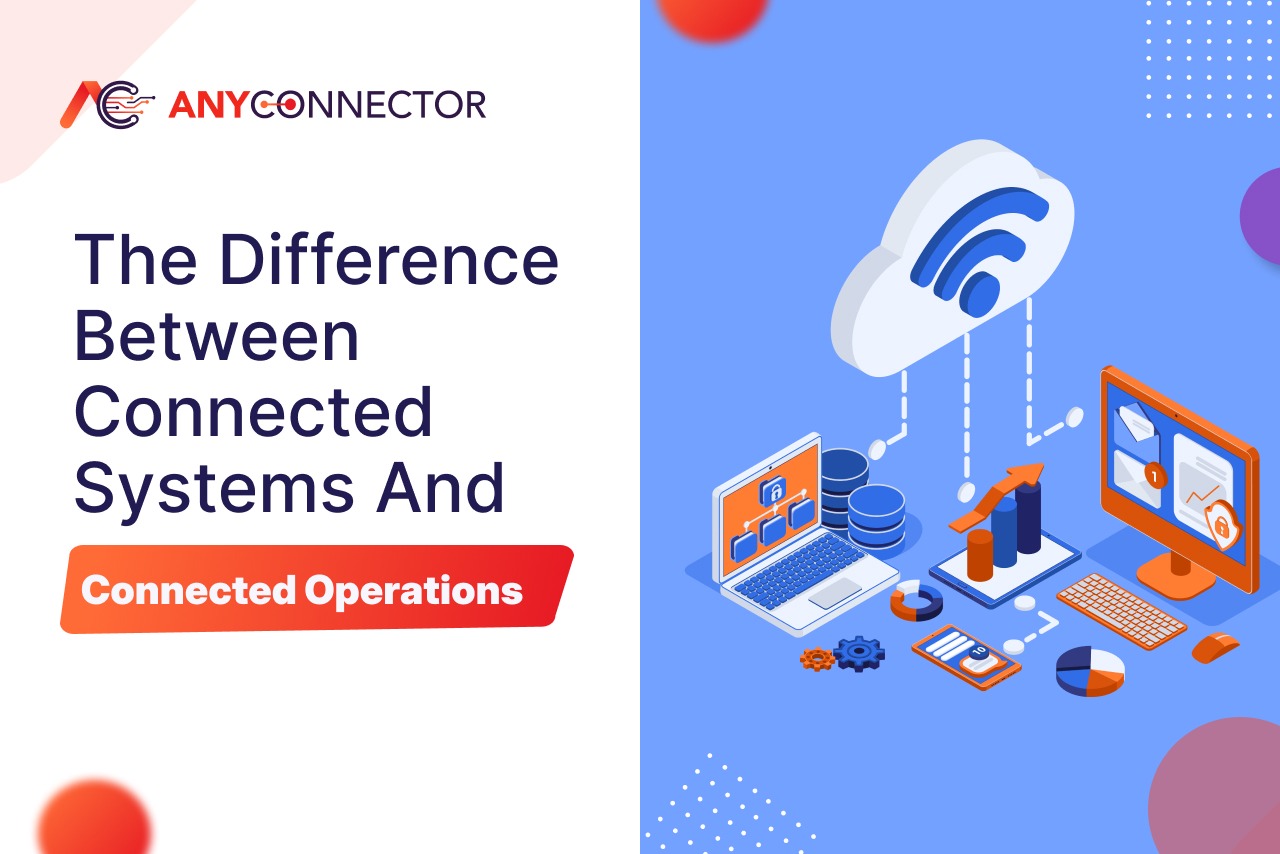
Connected systems move data. Connected operations move work.
A connected system can send and receive information through an API, middleware layer, file transfer, or scheduled sync. That is important progress. It replaces duplicate data entry, reduces spreadsheet dependency, and gives teams access to information in more than one place.
Connected operations go further. They are designed around the full business process- the trigger, the rules, the validations, the exceptions, the notifications, and the next steps that must happen after data moves. In other words, the integration is not just a pipe between systems; it becomes part of the operating model.
This is why data synchronization, while essential, is no longer enough on its own. As Any Connector explains in Why Data Synchronization Alone Is No Longer Enough, the real value begins when connected data helps the business respond, automate, and scale with confidence.
Connected operations go further. They are designed around the full business process- the trigger, the rules, the validations, the exceptions, the notifications, and the next steps that must happen after data moves. In other words, the integration is not just a pipe between systems; it becomes part of the operating model.
This is why data synchronization, while essential, is no longer enough on its own. As Any Connector explains in Why Data Synchronization Alone Is No Longer Enough, the real value begins when connected data helps the business respond, automate, and scale with confidence.
The difference shows up in everyday workflows
Think about employee onboarding. An HR platform creates a new employee record and syncs that information to payroll, scheduling, access management, and the company directory. On paper, the systems are connected. The data moved.
But the process may still be incomplete. A manager might need to be notified manually. Training tasks may need to be assigned in a separate tool. Payroll may still require a final verification before the first pay cycle. If each of those steps relies on someone remembering to act, the organization has connected systems - but not connected operations.
The same pattern appears across finance, restaurant operations, retail, supply chain, customer support, and HR. Information arrives, but the next step does not always happen automatically. Teams compensate with spreadsheets, reminders, reconciliation routines, and side conversations. Over time, those workarounds become invisible operational costs.
But the process may still be incomplete. A manager might need to be notified manually. Training tasks may need to be assigned in a separate tool. Payroll may still require a final verification before the first pay cycle. If each of those steps relies on someone remembering to act, the organization has connected systems - but not connected operations.
The same pattern appears across finance, restaurant operations, retail, supply chain, customer support, and HR. Information arrives, but the next step does not always happen automatically. Teams compensate with spreadsheets, reminders, reconciliation routines, and side conversations. Over time, those workarounds become invisible operational costs.
Why technically successful integrations still create friction
The problem is easy to miss because nothing looks obviously broken. The integration runs. The report loads. The export completes. Yet a team member still spends Monday morning comparing two systems because the numbers are “close enough” but not trusted. A manager still checks whether menu updates reached every channel. A support agent still opens multiple platforms before answering a customer.
These are not dramatic system failures. They are small moments of operational drag. And because they are absorbed by people instead of flagged by software, they often go unnoticed until they slow down growth, reporting, and decision-making.
Any Connector’s blog on The Hidden Operational Cost of “Almost Accurate” Data captures this challenge well- the most expensive data issues are often not the ones that stop work completely, but the ones that force teams to double-check, reconcile, and second-guess every day.
These are not dramatic system failures. They are small moments of operational drag. And because they are absorbed by people instead of flagged by software, they often go unnoticed until they slow down growth, reporting, and decision-making.
Any Connector’s blog on The Hidden Operational Cost of “Almost Accurate” Data captures this challenge well- the most expensive data issues are often not the ones that stop work completely, but the ones that force teams to double-check, reconcile, and second-guess every day.
Workflow alignment is the bridge
To move from connected systems to connected operations, businesses need to design integrations around outcomes rather than endpoints. The question should not only be, “Can these two systems exchange data?” It should also be, “What business event should this data trigger, who needs to know, what rule should apply, and how do we confirm the process is complete?”
That shift turns integration into orchestration. A new order does not simply create a record; it updates inventory, alerts fulfilment, posts revenue, and prepares reporting. A workforce change does not simply sync to payroll; it updates schedules, access, compliance steps, and downstream approvals. The workflow knows what should happen next.
This is the core idea behind Why Integration Visibility Is Becoming the Backbone of Modern IT Operations- teams need to see not only whether systems are connected, but whether the connected workflow is performing reliably across the business.
That shift turns integration into orchestration. A new order does not simply create a record; it updates inventory, alerts fulfilment, posts revenue, and prepares reporting. A workforce change does not simply sync to payroll; it updates schedules, access, compliance steps, and downstream approvals. The workflow knows what should happen next.
This is the core idea behind Why Integration Visibility Is Becoming the Backbone of Modern IT Operations- teams need to see not only whether systems are connected, but whether the connected workflow is performing reliably across the business.
Streamline Your Inventory. Order Smartly.
Start Simplifying Your Orders with Any Connector
Integration is now a business capability
For years, integration was treated as a technical requirement that IT delivered in the background. Today, that framing is too limited. Integration now shapes how quickly teams respond, how confidently leaders make decisions, and how effectively operations scale without adding manual complexity.
Businesses that treat integration as a strategic capability measure success differently. They do not stop at whether data moved. They ask whether work moved with it, whether exceptions were visible, whether teams trusted the outcome, and whether the process could scale without creating new bottlenecks.
Businesses that treat integration as a strategic capability measure success differently. They do not stop at whether data moved. They ask whether work moved with it, whether exceptions were visible, whether teams trusted the outcome, and whether the process could scale without creating new bottlenecks.
How Any Connector helps close the gap
Any Connector helps organizations move beyond basic system connectivity and build operations that are coordinated end to end. That means aligning workflows across applications, creating visibility into how data and processes move, and giving teams the confidence that the right action will happen at the right moment.
The difference between connected systems and connected operations is not a technology gap. It is a strategy gap. When businesses close it, they gain faster workflows, cleaner reporting, fewer manual workarounds, and teams that can focus on improving outcomes instead of managing friction.
Ready to build operations that are as connected as your systems? Talk to Any Connector about designing an integration strategy built around the outcomes your business needs.
The difference between connected systems and connected operations is not a technology gap. It is a strategy gap. When businesses close it, they gain faster workflows, cleaner reporting, fewer manual workarounds, and teams that can focus on improving outcomes instead of managing friction.
Ready to build operations that are as connected as your systems? Talk to Any Connector about designing an integration strategy built around the outcomes your business needs.